Evergreen Pet Memorials · buyer guide
Wood grain versus clear acrylic for a paw-print keepsake
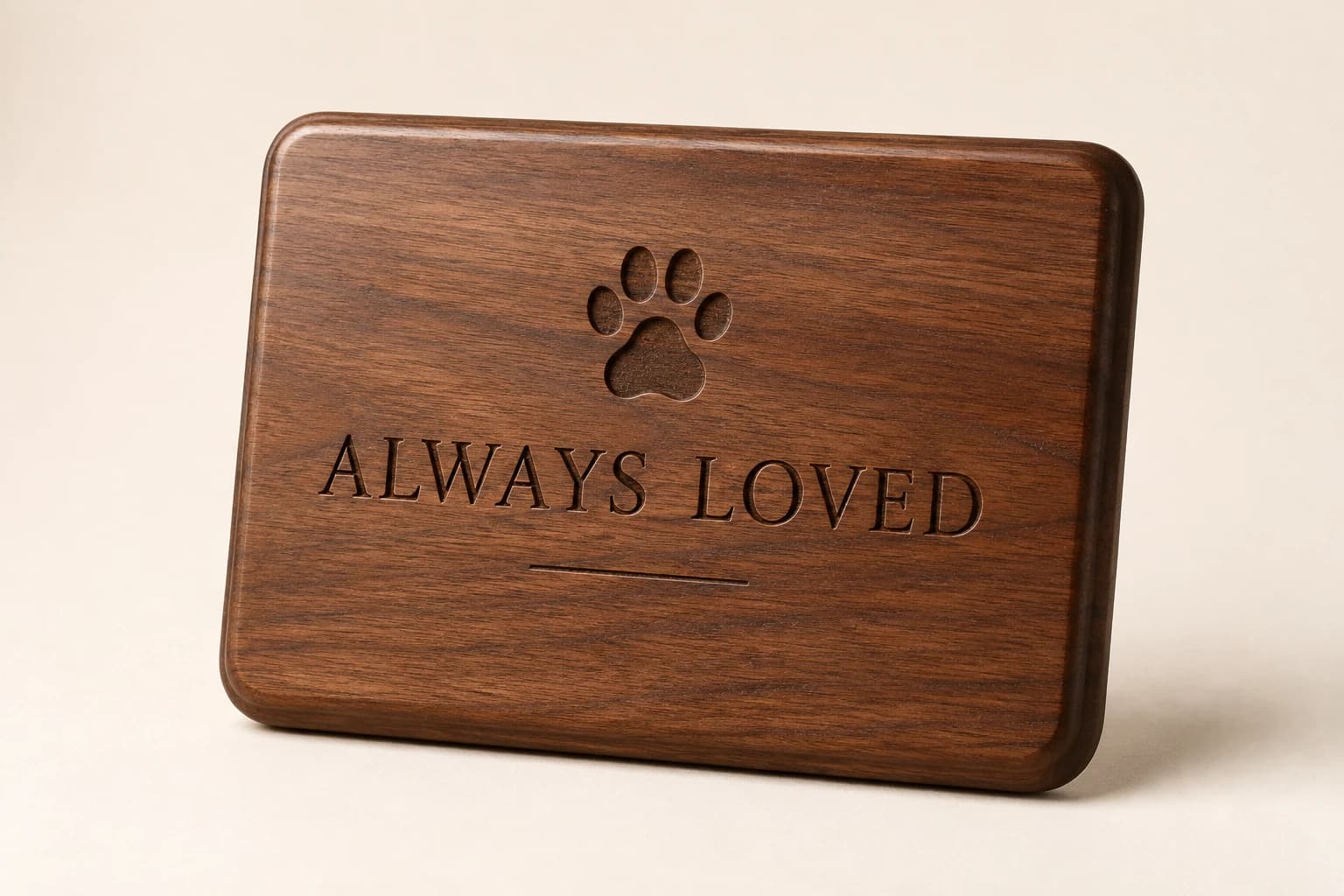
For worldwide Evergreen Pet Memorials orders, choose wood when its natural surface is part of the intended paw-print keepsake, and clear acrylic when the family prefers a different background relationship. Review the actual paw artwork on the proposed material. An enlarged decorative print and an accurately scaled impression are different choices that should be named honestly.
Reviewed 2026-09-05 · AI-assisted editorial review. General buying guidance; illustrative scenarios are not customer case studies. Images are AI-generated concepts.
Ask whether the family wants a recognizable decorative paw motif or a reproduction of a particular existing impression. Those can be equally meaningful while making different claims about the object. Do not describe a generic symbol as the pet’s actual paw or imply that a resized drawing preserves its original dimensions. The Custom Wooden Pet Memorial Plaque and Acrylic Paw Print Keepsake offer relevant catalog directions. Their final artwork and construction need a specific proposal. Work from an existing authorized print or image supplied by the family, and let them decide which details they want retained. This guide concerns that material and reproduction choice, not the collection of a new impression from an animal.
How should the original impression be prepared for discussion?
Keep the family’s original record separate from any cleaned, cropped or traced artwork. Identify what the designer may change, such as removing an unrelated paper border, and what should remain recognizable. A faint toe mark or irregular edge may have personal meaning even when software treats it as an imperfection.
Ask the family to approve the interpretation before those details are removed. If the image lacks a reliable physical scale, describe the result as an approved reproduction at the chosen size rather than an exact-size impression. Do not infer real dimensions from a screen view. The working file should explain the reference’s origin and the intended treatment without turning uncertainty into a confident authenticity claim.
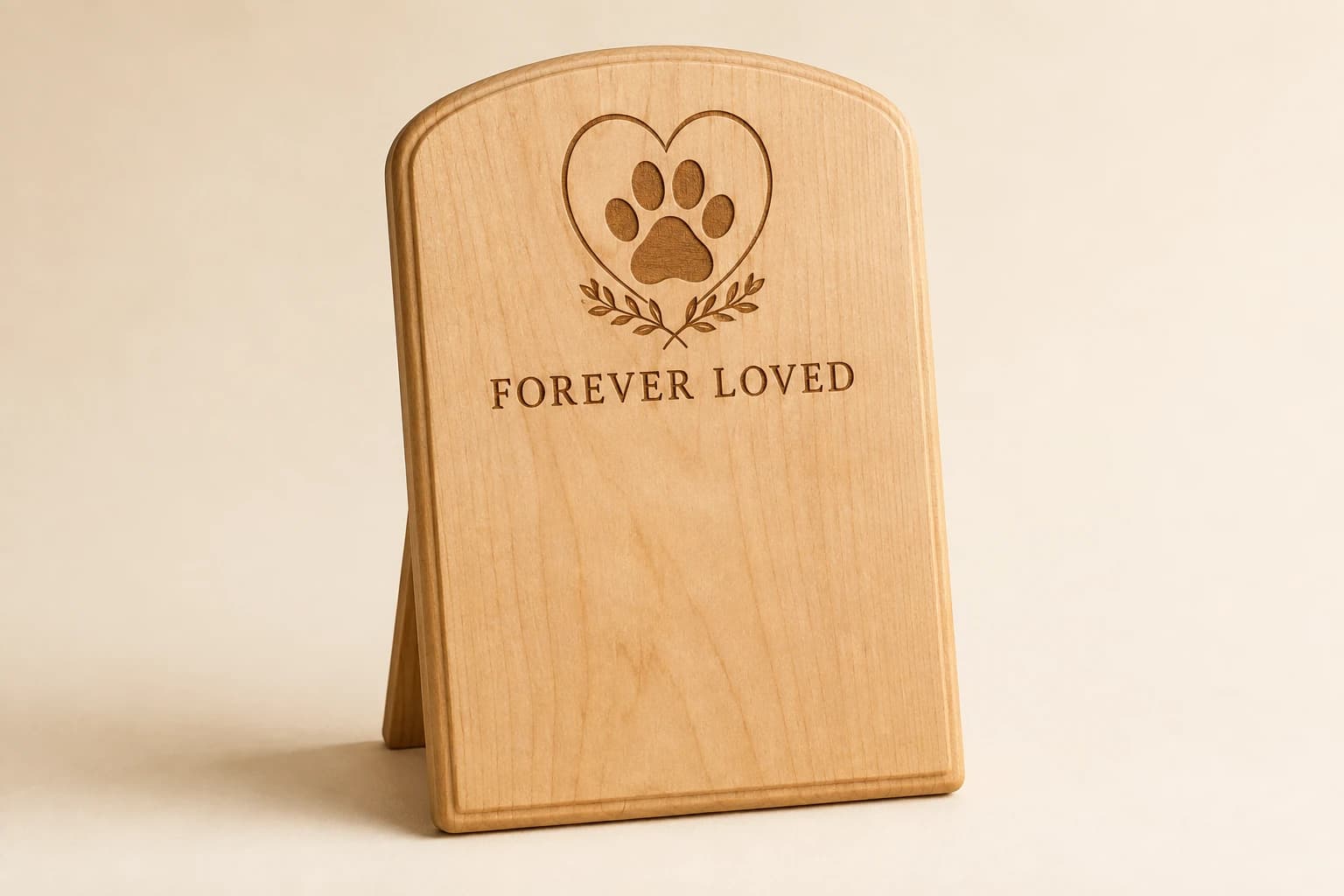
What changes when the print appears on wood?
Review the paw artwork with the actual proposed wood and decoration method rather than a uniform brown digital background. Natural grain and color variation can be part of the appearance the family values. They can also interact with small marks in a way the buyer wants to examine before choosing the piece.
Ask what representative material or artwork proof is available for the proposed process. Avoid promising that every wooden copy will have identical grain or that a finish name describes the exact visual result. The family should decide whether a natural surface supports the remembrance, with the supplier explaining the actual construction and any specific production limitations relevant to the paw image.
Trotec identifies wood color and grain consistency as factors in engraving appearance.
Sources: Trotec: Wood Material Handling
What should be checked on clear acrylic?
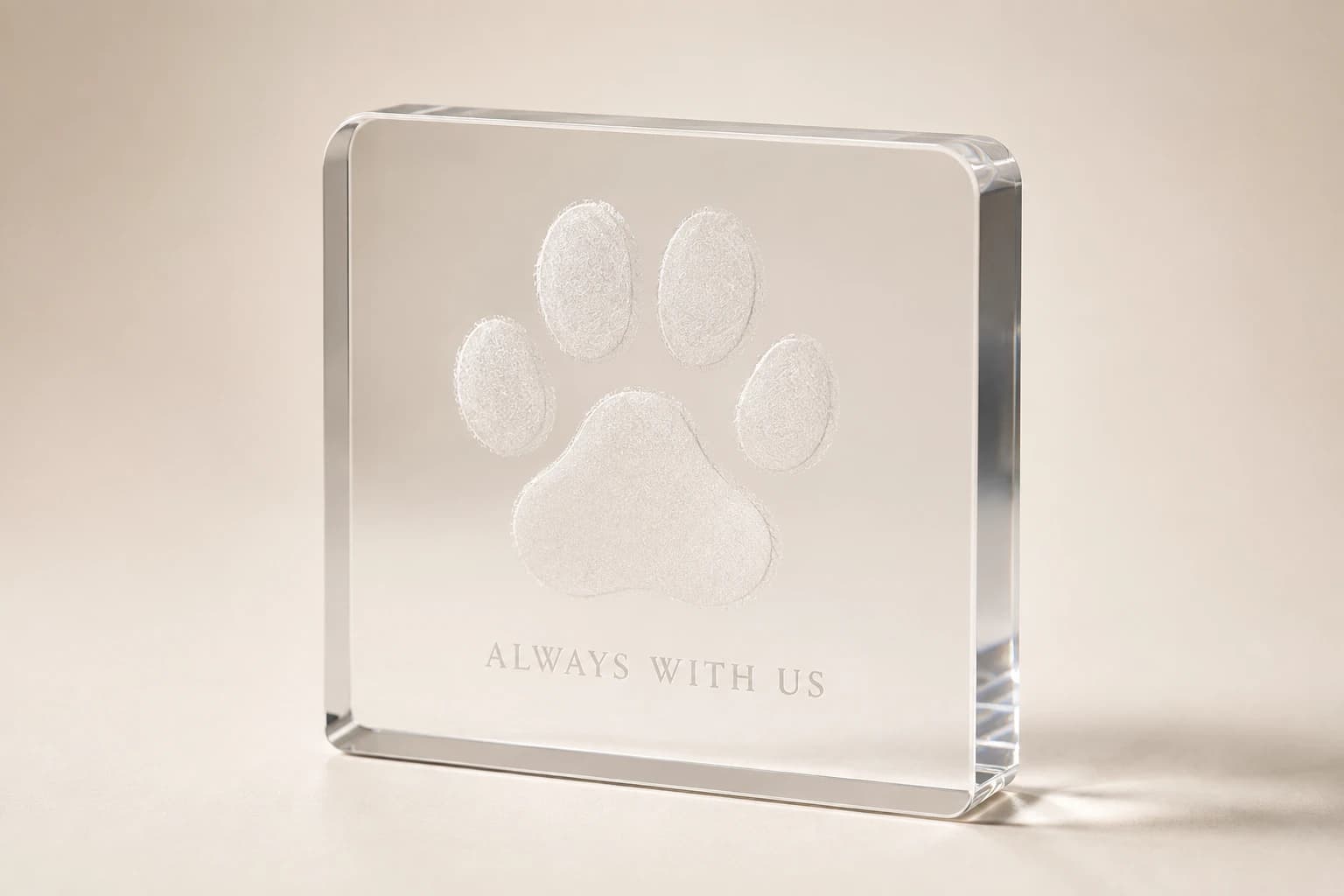
Ask where the paw image appears and what background or surface treatment is proposed. Clear acrylic can leave the display surroundings visible, while an opaque printed field or another treatment creates a different effect. A white preview screen does not settle that choice.
Review the paw’s solid areas and smaller marks in the complete proposed keepsake, including any separate base. The family may prefer the print to appear suspended visually or may want a defined contrasting background. Describe that preference before approving the material. Do not infer glass composition from crystal-style language or assume an acrylic paw-shaped outline means the interior image is the pet’s actual impression.
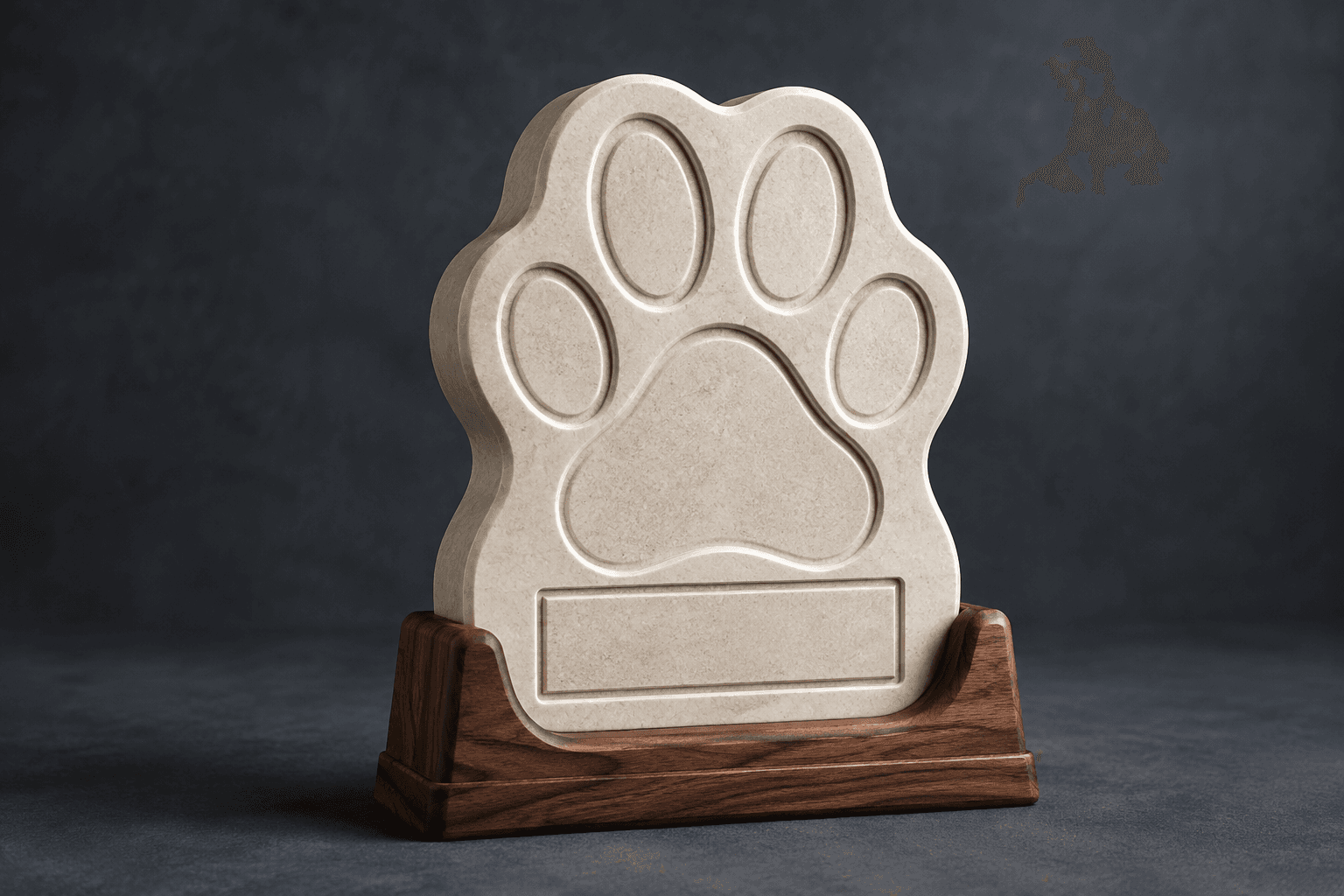
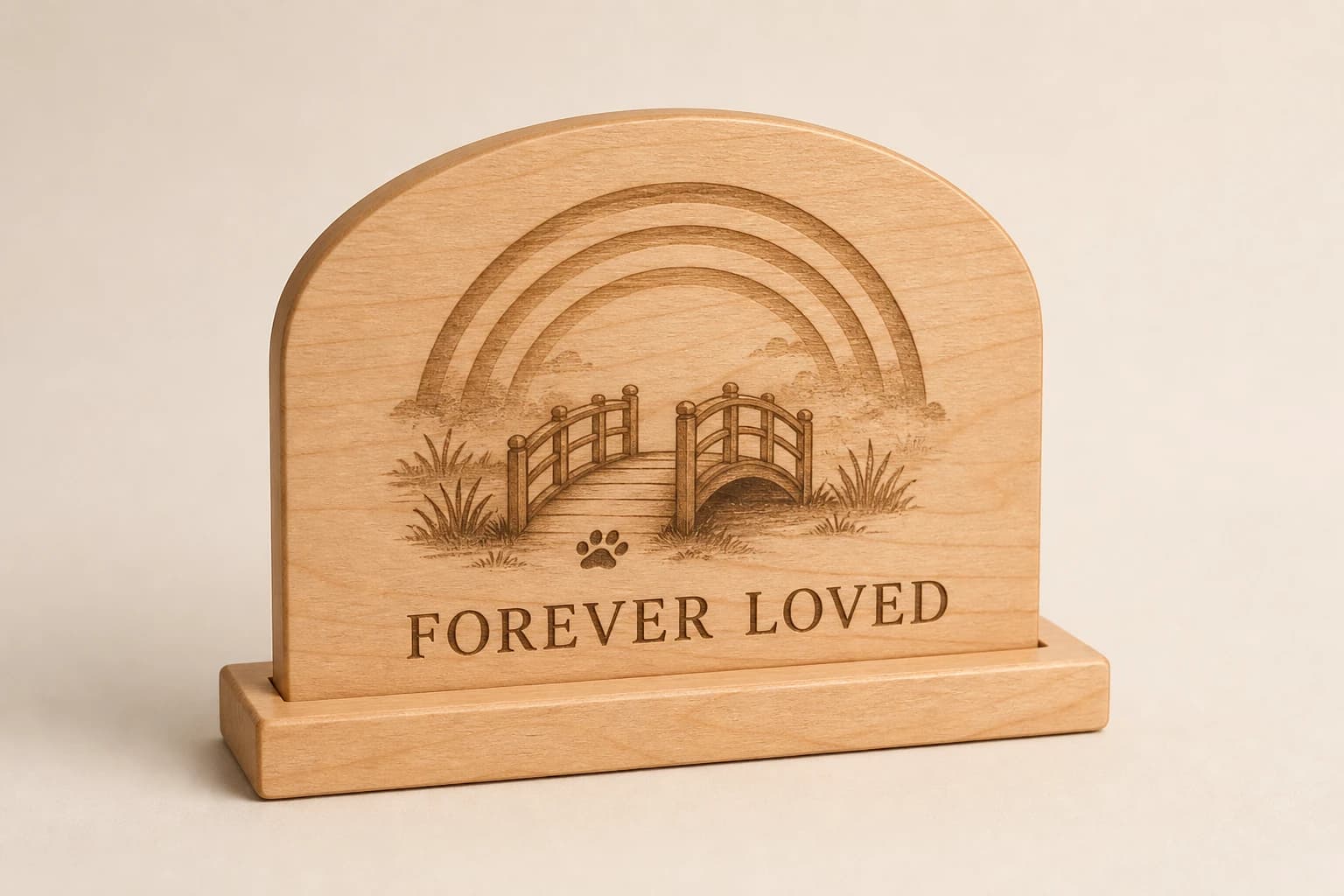
Should the paw print remain at its original size?
Preserve original scale only when the reference includes a reliable physical measurement and the family wants that relationship maintained. A larger decorative treatment may fit the intended display more comfortably, but it should be described as enlarged. A smaller version should likewise not be called life-size.
Ask the designer to show the chosen physical width or height beside the artwork and keep that value separate from image pixels. The family can then compare the actual-size intention with another approved layout. If the scale is unknown, proceed with an honestly labeled chosen-size reproduction. The meaning of the keepsake does not require inventing a measurement that the reference cannot establish.
How should the quote separate artwork and material choices?
Request the selected wood or acrylic construction, paw-image treatment, proposed image size, base or support and shipping as clear scope. Ask whether tracing, restoration, background removal or a representative proof is included and how additional changes are handled. No Evergreen Pet Memorials price range or minimum for this configuration is established here; obtain those figures for the chosen design.
The family can compare a natural wood interpretation with an acrylic proposal without assuming they use the same decoration process. Keep optional name or dedication text separate from the paw reproduction so a quiet image-only keepsake remains a legitimate choice rather than a design that must be filled with extra words.
Use the article’s example files
Use the worked comparison as a starting point. Replace its hypothetical dimensions and choices with the supplier’s actual proposal and the owner’s approved requirements.
What should be retained without overwriting the original memory?
Save the original family-supplied reference, the approved cleaned artwork and the final physical-size decision separately. A later copy can then reproduce the intended version without mistaking a resized preview for the original impression. If another household chooses a different material, review its own surface and background treatment while preserving the same approved source.
The family may want a personal irregularity retained in both pieces even when their dimensions differ. Keep that preference in the design record. The final handoff should describe what was actually made: an approved paw reproduction on the chosen construction, with its scale and interpretation stated accurately rather than implied by a decorative product name.
How does the illustrative product-selection example work?
In a fictional family brief, an existing paw impression has a reliably recorded width of 60 millimeters. One proposed keepsake reproduces it at 60 millimeters, while a compact version reduces it to 40. The family reviews those sizes deliberately rather than allowing the shape of the selected material to decide the scale without explanation.
The compact version uses 40 divided by 60, or two thirds of the recorded width, approximately 66.7 percent. It is 20 millimeters narrower than the reference and should be described as a reduced reproduction. The 60-millimeter version retains the recorded width, subject to the actual artwork and production review. These figures do not establish that a digital file is authentic or that every part of an impression has been reproduced precisely. The worksheet keeps the reference measurement, chosen output size and approved description separate. If the original measurement were unknown, the exact-size claim would remain on hold rather than being inferred from image pixels.
Optional calculation: Compare the proposed material descriptions
Which proposed construction fits the intended use?
Wood can make its natural grain part of the remembrance, while clear acrylic can create a different relationship between the paw image and its surroundings. Acrylic with a defined background offers another direction. Compare the approved impression treatment, physical scale and representative surface evidence rather than assuming the material alone determines authenticity or emotional value.
| Option | Wood paw-print keepsake | Clear acrylic treatment | Defined background on acrylic |
|---|---|---|---|
| Best reason to choose it | Choose this when the family wants the proposed natural wood surface to be part of the object. | Choose this when the family prefers the approved paw image against visible surrounding space. | Choose this when the family wants a controlled image field within the acrylic design. |
| What the buyer must review | Review grain interaction with the actual paw image and the proposed engraving or other decoration method. | Review image contrast, placement and any clear areas in the actual proposed display setting. | Review the boundary between opaque and clear areas and how the paw’s small marks appear. |
| What the quote should identify | Identify the wood construction, image treatment, chosen physical scale and support. | Identify the acrylic form, decoration surface and any separate base or backing. | Identify the background method and artwork interpretation without implying an exact-size original unless verified. |
What should you confirm before requesting this product?
Confirm whether the family wants an actual-impression reproduction, a chosen-size interpretation or a decorative motif. Keep the original reference separate from cleaned artwork and material proofs. The wood or acrylic proposal should show how the image appears and what its stated scale means, without adding an unsupported claim about the pet’s original paw.
What affects the cost of a wood or acrylic paw-print keepsake?
Ask Evergreen Pet Memorials to quote the actual construction, paw-image preparation, decoration, physical size, support and shipping, with its applicable minimum or range. Tracing or restoration can be separate work. Compare complete proposed treatments rather than assuming a natural wood surface and a clear acrylic form use the same image-production process.
Can a generic paw symbol be called the pet’s own print?
No. Describe it as a decorative motif unless it is based on the family’s authorized actual-impression reference. A chosen symbol can still be meaningful without a false authenticity claim. Keep the source and approved interpretation visible in the design record so a later copy preserves the same honest description.
Will two wooden keepsakes have identical grain?
Do not promise identical natural appearance from the material category. Ask the supplier what the proposed wood and finish reference represents, and review how the paw artwork interacts with it. The family may value natural variation, but the actual production proposal should explain the construction rather than imply a uniform printed background.
What is needed to call the reproduction actual size?
Use a reliable physical measurement of the original reference and an explicitly approved output dimension, then ask the supplier to review the production artwork. A screen image or pixel count alone cannot establish the pet’s paw size. If the measurement is unknown, use a chosen-size description instead of inventing an exact-size claim.
Does the two-thirds example mean the smaller keepsake is less meaningful?
No. It only describes the hypothetical scale:40 millimeters is two thirds of a 60-millimeter reference. The family may prefer that compact format. The important decision is to approve the size and describe it accurately, while preserving any distinctive marks they want retained in the chosen material treatment.
Sources and scope
The sources below support the cited technical details. The ordering workflows are editorial recommendations. Your project specification, price and schedule are established in the written quote and approved proof.
- Trotec: Wood Material Handling · checked 2026-09-05
Which buying guide should you read next?
All buying guidesFor worldwide Evergreen Pet Memorials orders, choose a pet photograph by the features the family wants preserved and the actual proposed crop, then review the image and inscription together.
For worldwide Evergreen Pet Memorials orders, choose a garden marker or indoor pet keepsake around the family’s place of remembrance, not a presumed rule about how a pet should be memorialized.